

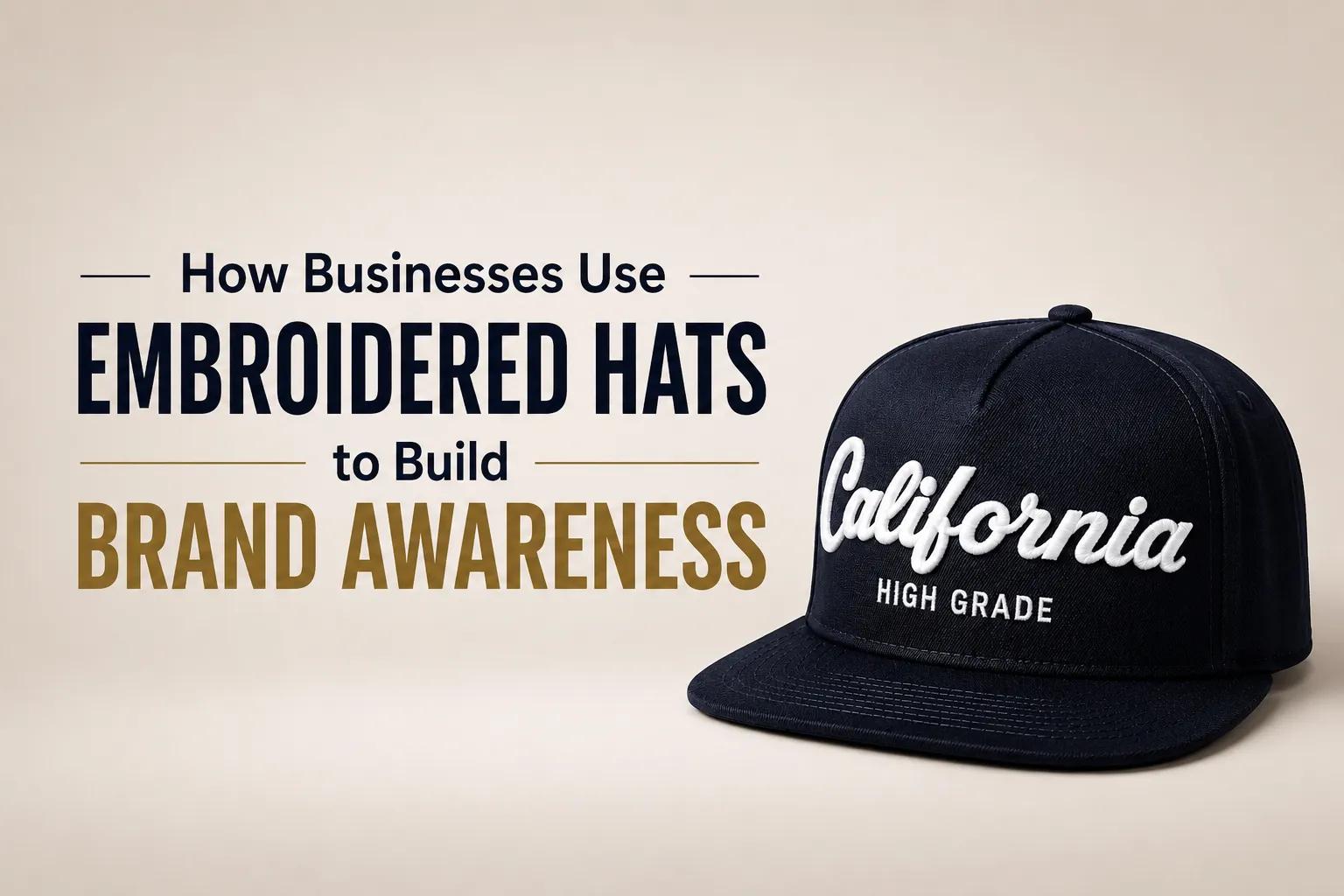
Embroidered Hats
Headwear has become a common tool in corporate branding strategies. Among the various options available, embroidered hats are frequently selected by organizations seeking a durable and visible way to represent their identity. This article examines how businesses use bulk embroidered hats to support brand awareness, the production factors that influence quality, and the considerations organizations typically weigh before placing a large order.
The Role of Headwear in Brand Visibility
Branded apparel functions differently from traditional advertising. While digital and print advertisements reach an audience for a limited time, physical items such as hats remain in circulation for months or years after distribution. A hat worn by an employee, customer, or event attendee continues to display a logo wherever that person goes, extending exposure beyond the original point of contact.
This extended visibility is one reason branded headwear is used across industries, including retail, hospitality, construction, and corporate services. Organizations distribute hats to staff for daily wear, to customers as promotional items, and to attendees at trade shows and community events.
Why Businesses Choose Bulk Embroidered Hats
Embroidery is one of the most established methods for applying logos and text to fabric. When ordered in volume, bulk embroidered hats offer several practical advantages that make them a common choice among organizations managing large-scale distribution.
Durability and Professional Appearance
Embroidered designs are stitched directly into the fabric, which allows them to withstand repeated washing, prolonged sun exposure, and daily wear without significant fading. This durability is a primary reason many organizations select embroidered headwear for uniforms, staff apparel, and long-term promotional campaigns.
The raised, textured appearance of embroidery also gives a hat a more structured and formal look compared to other decoration methods. This quality makes embroidered headwear a frequent choice for corporate settings where a polished appearance is a priority.
Consistent Brand Identity Across Teams
Organizations with multiple employees or locations often require uniformity in their branded apparel. Ordering wholesale embroidered hats allows a company to apply the same logo, colors, and placement across every unit in a production run. This consistency supports a unified visual identity, particularly for businesses operating across several sites or presenting a team at public events.
Industries That Rely on Embroidered Headwear
The demand for embroidered headwear spans a wide range of sectors, each with distinct use cases.
Retail businesses use embroidered caps as both staff uniforms and standalone products sold directly to customers.
Restaurants and hospitality businesses use embroidered headwear to create a consistent staff appearance while also offering it as merchandise to loyal customers.
Construction and outdoor service companies rely on caps for practical sun protection in addition to brand identification on job sites.
Corporate and technology organizations distribute caps at conferences, trade shows, and employee onboarding events.
Sports teams and fitness organizations use caps to reinforce group identity among members and staff.
Across these industries, embroidered headwear is valued for its combination of practicality and visibility, serving a functional purpose while also supporting brand recognition.
Bulk Ordering Versus Wholesale Ordering
The terms used to describe large volume orders can vary depending on the manufacturer and the size of the order itself. Bulk embroidered hats generally refer to orders sized for a single organization, such as outfitting one company's staff or supplying one event. Wholesale embroidered hats often describe larger production runs intended for resale, retail distribution, or multi-location businesses.
In practice, the production process for both is similar. A design is submitted, reviewed, and applied consistently across every unit in the order. The primary difference lies in the intended use and the scale of distribution rather than the manufacturing method itself.
Considerations When Ordering Custom Headwear
Organizations planning a large order of embroidered hats typically evaluate several factors before finalizing a design and placing an order.
Design and Placement
Logo size and placement affect how clearly a design reads at a distance. Smaller, centered logos on the front panel of a hat are generally more legible than oversized or asymmetrical placements. Color contrast between the logo and the hat fabric also influences visibility, since thread color must stand out clearly against the base material.
Production and Quality Control
Consistency across a large order depends on the production process used by the manufacturer. Businesses ordering embroidered headwear in large quantities often request a design proof before full production begins, allowing them to confirm logo placement, color accuracy, and overall appearance prior to committing to a full run. Quality control measures during production, such as checking stitch density and material consistency, help ensure that every unit in an order matches the approved design.
Shipping capability is another consideration for organizations with multiple locations or international operations. Manufacturers that offer worldwide shipping allow businesses to distribute headwear to teams or retail locations across different regions from a single order.
Minimum Order Requirements
Manufacturers typically set a minimum order quantity for embroidered headwear, since production setup involves preparing digitized artwork and calibrating embroidery equipment for a specific design. Lower minimum requirements make it easier for smaller organizations to access wholesale embroidered hats without needing to place an order sized for a much larger operation.
Custom Headwear Production in Practice
Some manufacturers specialize specifically in producing bulk embroidered hats for business clients. Montauk Hat, based in Malibu, California, is one example of a company that produces custom headwear for organizations across multiple industries, including retail, hospitality, and corporate sectors. The company operates an in-house production process, which allows for direct oversight of embroidery at each stage of manufacturing. This type of production model is common among manufacturers that serve businesses requiring consistent quality across large-volume orders.
Companies in this space generally offer a range of hat styles, including structured caps, trucker hats, and other headwear formats, along with design proofing services that allow clients to review artwork before production begins.
Measuring the Impact of Branded Headwear
Assessing the effectiveness of a branded headwear program typically involves observing indirect indicators rather than direct sales figures. Organizations may track how often branded items appear in customer photographs, social media posts, or public settings following distribution. Employee feedback on comfort and wearability also provides insight into how frequently staff choose to wear branded items outside of required uniform settings.
While these methods do not provide precise return on investment figures in the way that digital advertising metrics do, they offer a general sense of how visible a brand becomes through headwear distribution over time.
Conclusion
Bulk embroidered hats remain a widely used tool for businesses seeking to build brand awareness through durable, visible apparel. Whether an organization requires a smaller batch for a single team or a larger wholesale embroidered hat order for retail distribution, the underlying production process centers on consistent stitching, accurate color matching, and reliable quality control across every unit. Embroidered headwear continues to serve practical and promotional functions across industries ranging from retail and hospitality to construction and corporate services. Organizations considering a large order typically weigh design complexity, intended use, and production quality when selecting a manufacturer, with many turning to specialized producers capable of managing consistent output across an entire run.